
Sistemas silvopastoriles, arreglos y usos
Silvopastoral systems, arrangements and uses
Barra lateral del artículo
 PDF
PDF
 FLIP
FLIP




Términos de la licencia (VER)

Esta obra está bajo una licencia internacional Creative Commons Atribución-NoComercial-CompartirIgual 4.0.


Esta revista y sus artículos se publican bajo la licencia Creative Commons (CC BY – NC-ND 4.0), que permite el uso, distribución y reproducción sin restricciones en cualquier medio o formato, siempre que se acredite el autor y la fuente originales; no usar bajo propósitos comerciales.
Contenido principal del artículo
Resumen
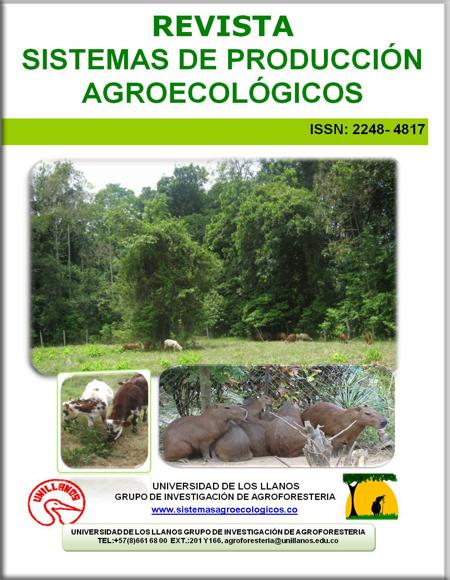
Los sistemas de producción ganadera tanto de carne como de doble propósito, con base en el ganado bovino, han sido cuestionados desde el punto de vista ambiental, en la medida que se asocian con la degradación del ecosistema causado por la deforestación para establecer pasturas. La explotación indiscriminada de los bosques es también producto del acelerado crecimiento poblacional, del mercadeo de maderas de alto valor comercial, del establecimiento de cultivos limpios y de la necesidad de conseguir leña. En consecuencia, es evidente la necesidad de desarrollar tecnologías ecológicamente sostenibles y económicamente competitivas, para prevenir el acelerado ritmo de la tumba de bosques y buscar disminuir las extensas áreas de pasturas degradadas que se han identificado en la región. Por otro lado, la región de la Orinoquia colombiana se constituye en un excelente medio para la integración del árbol en sistemas agrosilvopastoriles y silvopastoriles, donde este componente contribuye con los sistemas de producción pecuaria y agrícola. El uso de árboles multipropósito existentes en cada región, integrados con pasturas y animales en sistemas de producción, busca mejorar el nivel alimenticio y productivo de los animales, la utilización racional de los recursos y mejorar el desempeño económico y ambiental de la ganadería. Igualmente, permite romper la estacionalidad de la producción en donde la cantidad de biomasa disponible para el consumo es baja. La introducción de árboles para diferentes propósitos, responde en parte a los problemas de la deforestación y degradación del ecosistema y se proyecta como una alternativa válida para intensificar la producción y la sostenibilidad de los sistemas tradicionales. Así mismo, la presencia de árboles favorece a los sistemas de producción en aspectos tales como ciclaje de los nutrientes, aumento en la diversidad de especies y brinda protección física al suelo de los efectos del sol, vientos y las lluvias intensas. En los animales ofrece sombra, reduciendo el estrés por calor y radiación directa, disponibilidad de forraje en cantidad y calidad. Igualmente, reducen la evapotranspiración, la velocidad del viento y el impacto de las gotas de lluvia. Adicionalmente, la introducción de árboles se puede orientar a una reforestación o arborización de áreas degradadas y formación de corredores biológicos que a la final se traduce en una menor presión sobre los bosques primarios. De esta manera se reduce la degradación de los recursos suelo, agua y biodiversidad.
Descargas
Detalles del artículo
Palabras clave







Referencias
Arez, M., García, F. Eucalipto. Eucalipto pellita (F Muell). Plegable divulgativo Nº 54. CORPOICA – CIAT. Villavicencio. Meta. 2 p. 2007.
Álvarez, M., García, F. Acacia. Acacia mangium (Wild). Plegable divulgativo Nº 54. CORPOICA – CIAT. Villavicencio. Meta. 2 p. 2007.
Borel, R. Sistemas silvopastoriles para la producción animal en el tropico y uso de árboles forrajeros en alimentación animal. En: Memorias VI Encuentro Nacional de Zootecnia. Cali. 24 p. 1987.
Bueno, G. A. Estrategias para la implementación de modelos silvopastoriles en la Altillanura Colombiana. CORPOICA – PRONATTA. Boletín Técnico N° 08. Cod. 02.02.08.08.33.97. Villavicencio. Meta. Colombia. 29 p. 1997.
Bueno, G. A. Evaluación de especies arbóreas y alternativas forrajeras para la Altillanura Colombiana. CORPOICA – PRONATTA. Informe Técnico N° 10. Villavicencio. Meta. Colombia. 63 p. 1998.
Centro Agronómico Tropical de Investigación y Enseñanza. CATIE. Sistemas Agroforestales. Ed: Jiménez, Vargas, A. Serie Técnica. Manual Técnico Nº 32. Turrialba. Costa Rica. 1998.
Fassbender, H. W. Modelos Edafológicos de Sistemas Agroforestales. CATIE/GTZ, Turrialba, Costa Rica. Serie de materiales de enseñanza N° 29 475. 1987.
Fassbender, H. W. Modelos Edafológicos de Sistemas Agroforestales. Centro Agronómico Tropical de Investigación y Enseñanza CATIE, Proyecto agroforestal CATIE/GTZ. Turrialba, Costa Rica. 1993.
Fonseca, I., García, F. ABeCè Forestal Herramienta para tomar decisiones. Manual Técnico No. 11. Corporación Colombiana de Investigación Agropecuaria “CORPOICA” – Gobernación del Meta. Villavicencio, Meta. Colombia. 114 p. 2007.
García, R. F. Sistemas agroforestales de Yopal: Diagnóstico y diseño. CORPOICA – MADR. Yopal. Casanare. 28 p. 2006.
Giraldo, L.A. El potencial de los sistemas silvopastoriles para la ganadería Sostenible. En: Memorias del Curso Pasturas Tropicales. Corporación Colombiana de Investigación Agropecuaria CORPOICA. Medellín. Colombia. pp. 141-172. 1996.
Martínez, A., García R. F. Desarrollo de Sistemas Agroforestales para la Orinoquia Colombiana. Boletín Divulgativo Nº 12. CORPOICA – MADR. Villavicencio. Meta. 28 p. 2003.
Murgueito, E; Ibrahim, M; Ramírez, E; Zapata, A; Mejia, C; Casasola, F. Usos de la tierra en fincas ganaderas. Ed. 1. Fundación Centro para la Investigación en Sistemas Sostenibles de Producción Agropecuaria. Cali, Colombia. 97 p. 2003.
Navas, G., Barragán, C. Caracterización y usos potenciales de especies vegetales de un bosque de galería secundario. Boletín Técnico Nº 28. Corporación Colombiana de Investigación Agropecuaria “CORPOICA” y Programa Nacional de Transferencia de Tecnología “PRONATTA”. Villavicencio, Meta. Colombia. 36 p. 2002.
Roncallo, B.; Navas, A.; Garibello, A. Potencial de los frutos de plantas nativas en la alimentación de rumiantes. En: Memorias del II Seminario Internacional sobre Sistemas Silvopastoriles; Alternativa en la ganadería. Valledupar, Neiva, Villavicencio: MADR. Diciembre de 1996. 15 p. 1996.
Rodríguez, R; Arias, D; Moya, R; Meza, A; Murillo, O; Arguedas, M. Manual para productores de Melina Gmelina arborea. Cartago, Costa Rica. 156 p. 2004.
Simón, L. Utilización de árboles leguminosos en cercas vivas y pastoreo En: Memorias del II Seminario Internacional, sistemas silvopastoriles; Alternativa en la ganadería. Villavicencio. 12 p. 1996.
Somarriba, E. Diagnóstico y diseño agroforestal. Agroforestería de las Américas, 5: 17-18. 1998.
Torres, M; Otálvaro, N; Álvarez, W; Marín, J. Identificación botánica y caracterización bromatológica de las especies arbóreas y arbustivas locales reportadas como forrajeras por productores de los municipios de Mesetas, Vista hermosa, Lejanías y Puerto Rico (Meta). CORMACARENA. Villavicencio. Meta. 150 p. 2002.
Villanueva, C; Ibrahim, M; Casasola, F. Valor económico y ecológico de las cercas vivas en fincas y paisajes ganaderos. Informe técnico Nª 372. CATIE. Turrialba. Costa Rica. 36 p. 2008.
Young, A. Agroforestry for soli conservation. CAB – International ICRAF. Sciencie and Practice of Agroforestry. N° 4. 276 p. 1989.